
API & System Integrations
Disconnected systems, connected properly.
Connect your CRM, ERP, payment providers and internal systems so data flows without re-keying.
At a glance
When systems don't talk to each other, people become the integration layer — copying, exporting and reconciling. We design and build integrations between CRMs, ERPs, payment providers, marketplaces and internal databases, with the idempotency, retries and reconciliation that real-world APIs demand.
Last updated
- Best for
- Orders, contacts or invoices are re-typed from one system into another.
- Typical deliverables
- CRM integration (HubSpot, Salesforce, Zoho and others) · ERP and inventory system integration · Payment gateways: Stripe, Razorpay and payouts
- Technologies
- REST, Webhooks, OpenAPI / Swagger, Node.js, Express, Stripe
- Proven in
- Wooziee, Client Onboarding & CRM, ERP Order Analytics
The problem
What businesses tell us.
- Orders, contacts or invoices are re-typed from one system into another.
- A payment succeeds but the order or ticket is never created — or is created twice.
- Integrations break silently whenever a vendor changes their API.
- Reporting requires stitching together exports from several tools.
- A legacy system has no API, yet its data is critical.
Our approach
How we deliver it.
- 01
Map the data contract
We define which system owns each field, how records are matched and what happens on conflict.
- 02
Build for failure
Webhook signature verification, idempotency keys, retries and dead-letter handling are standard.
- 03
Reconcile
Scheduled reconciliation jobs detect and report mismatches before they become customer problems.
- 04
Document and monitor
OpenAPI documentation, alerting and dashboards make integrations supportable.
Features & capabilities
What's included.
- CRM integration (HubSpot, Salesforce, Zoho and others)
- ERP and inventory system integration
- Payment gateways: Stripe, Razorpay and payouts
- Webhook design and verification
- Data synchronisation and migration
- Custom REST APIs and API gateways
- Email, SMS and push notification providers
- Maps, wallet passes and calendar integrations
Technologies & integrations
Tools we use.
- REST
- Webhooks
- OpenAPI / Swagger
- Node.js
- Express
- Stripe
- Razorpay
- HubSpot
- SendGrid
- Mailgun
- Google Wallet
- Google Maps
- Bull queues
- n8n
We choose tools to suit your existing systems, team skills and data requirements — not the other way round.
Relevant work
Examples from our portfolio.

Events & Entertainment
Wooziee
One platform for discovery, checkout, QR entry, organiser analytics and payouts — across web, admin, Android and iOS.
- Web & Mobile
- SaaS & Platforms
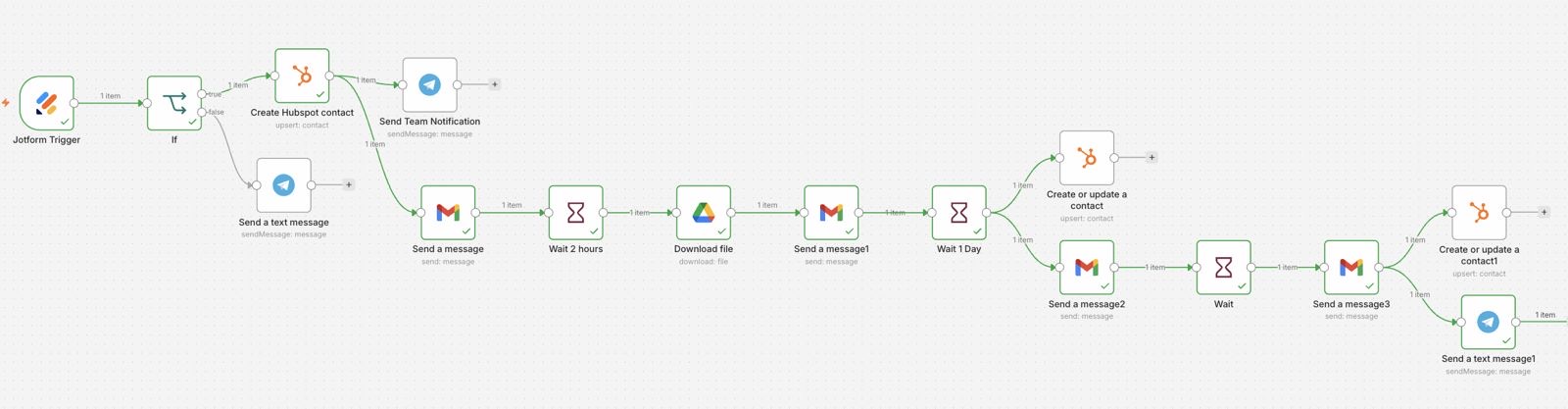 n8n workflow
Sales & Customer Success
Client Onboarding & CRM
From Jotform submission to HubSpot contact, team alert, welcome email, timed follow-ups and CRM stage updates — automatically.
- AI & Automation
- Business Applications
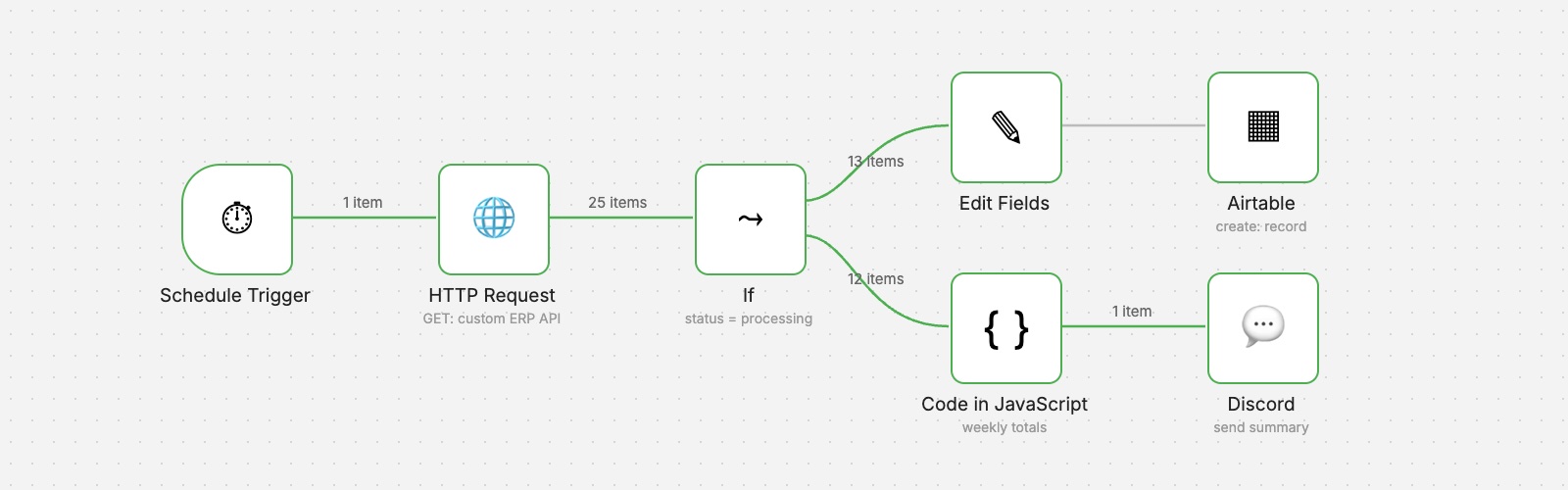 n8n workflow
Operations & Reporting
ERP Order Analytics
Scheduled order retrieval from a custom ERP, structured records in Airtable and a weekly performance summary posted to Discord.
- AI & Automation
- Business Applications
Business benefits
What changes for your organisation.
No more re-keying
Data moves between systems automatically and consistently.
Payments you can trust
Verified webhooks and reconciliation turn each payment into exactly one outcome.
Single version of the truth
Clear data ownership removes conflicting records.
Supportable
Monitoring and documentation mean issues are found and fixed quickly.
FAQ
API & System Integrations: common questions.
Which systems can you integrate?
Any system with an API, webhook, database access or reliable export. We regularly work with CRMs, payment providers, spreadsheets, email platforms, ERPs and custom internal APIs.
What if our system has no API?
Options include direct database integration, scheduled file exchange, or building a small API layer around the legacy system. We'll recommend the safest route after reviewing it.
Should integrations be built in code or in n8n?
Simple, low-volume integrations are often fastest in n8n. High-volume, transactional or security-critical integrations, such as payments, are usually better as code within your application. Many projects use both.
How do you handle API rate limits and failures?
With queues, exponential back-off, idempotent operations and alerting, so temporary failures are retried safely and persistent ones are escalated.
Let's talk about api & system integrations.
Share what's slowing your team down — a manual process, a disconnected system or a product idea. We'll reply with practical next steps, usually within two working days.